Reviews
What shoppers told us about trusting an online store

Every day, shoppers land on your store and leave without buying. Most of the time, you'll never know why.
Part of the answer is that trust doesn't work the way most store owners expect. Shoppers don't weigh everything at once. They move through a sequence: a quick credibility check before they've read a single word, a deeper look at your reviews once your store has cleared that bar, and a judgment about product quality that determines whether they ever come back.
We surveyed 564 shoppers to understand how that sequence works, and where it breaks down. The findings are specific enough to act on.
First impressions form before reviews are read
The most counterintuitive result in the dataset: when we asked shoppers what makes a store feel trustworthy before they've read a single review, secure payment options ranked first. Not reviews. Not design. Payment credibility.
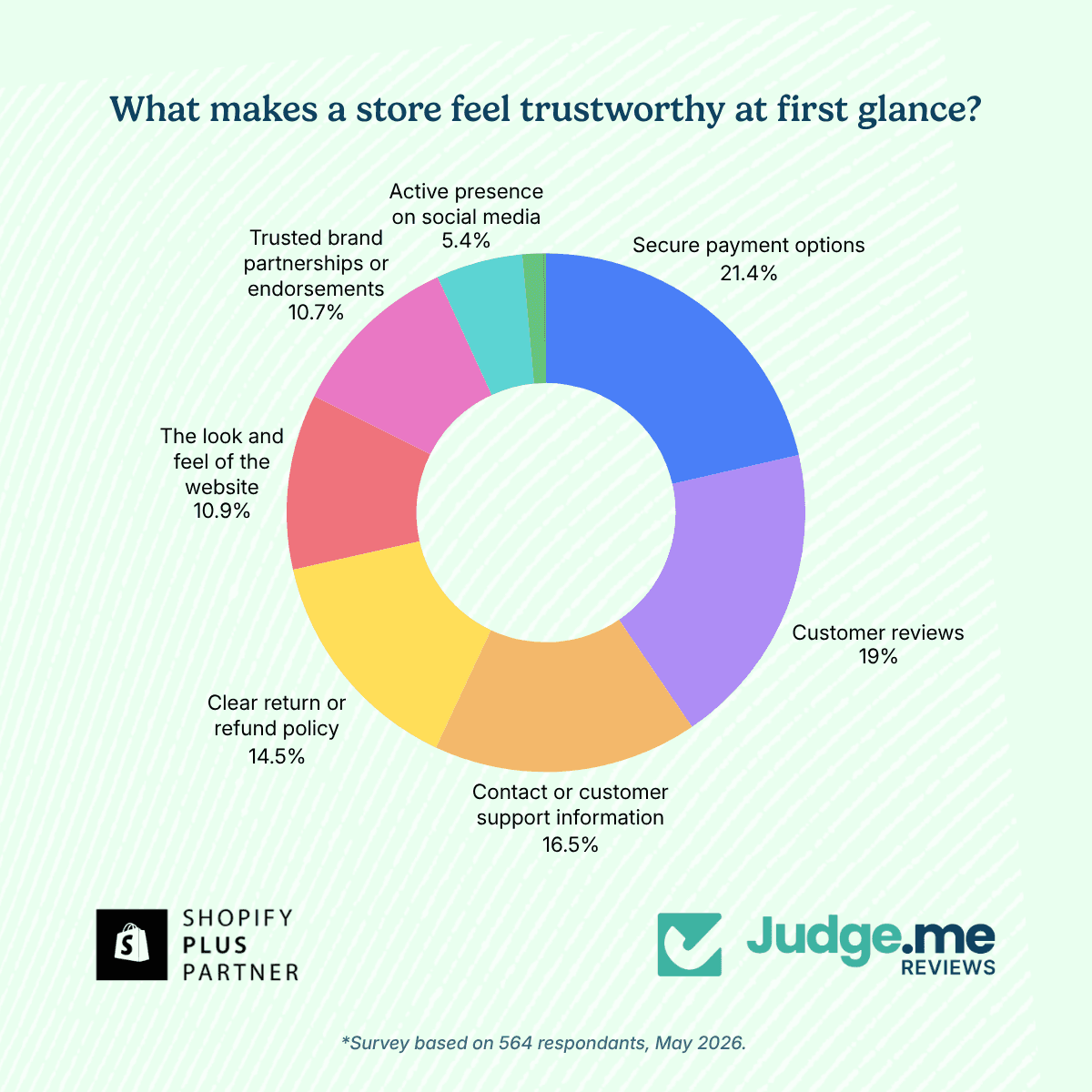
Reviews came second. Social media presence, despite the time and budget you may invest in it, came last at 5.4%.
The practical implication is straightforward: if your store doesn't clear the credibility check in the first few seconds, the reviews never get read. A strong review collection only does its job once a shopper has decided your store is worth their attention.
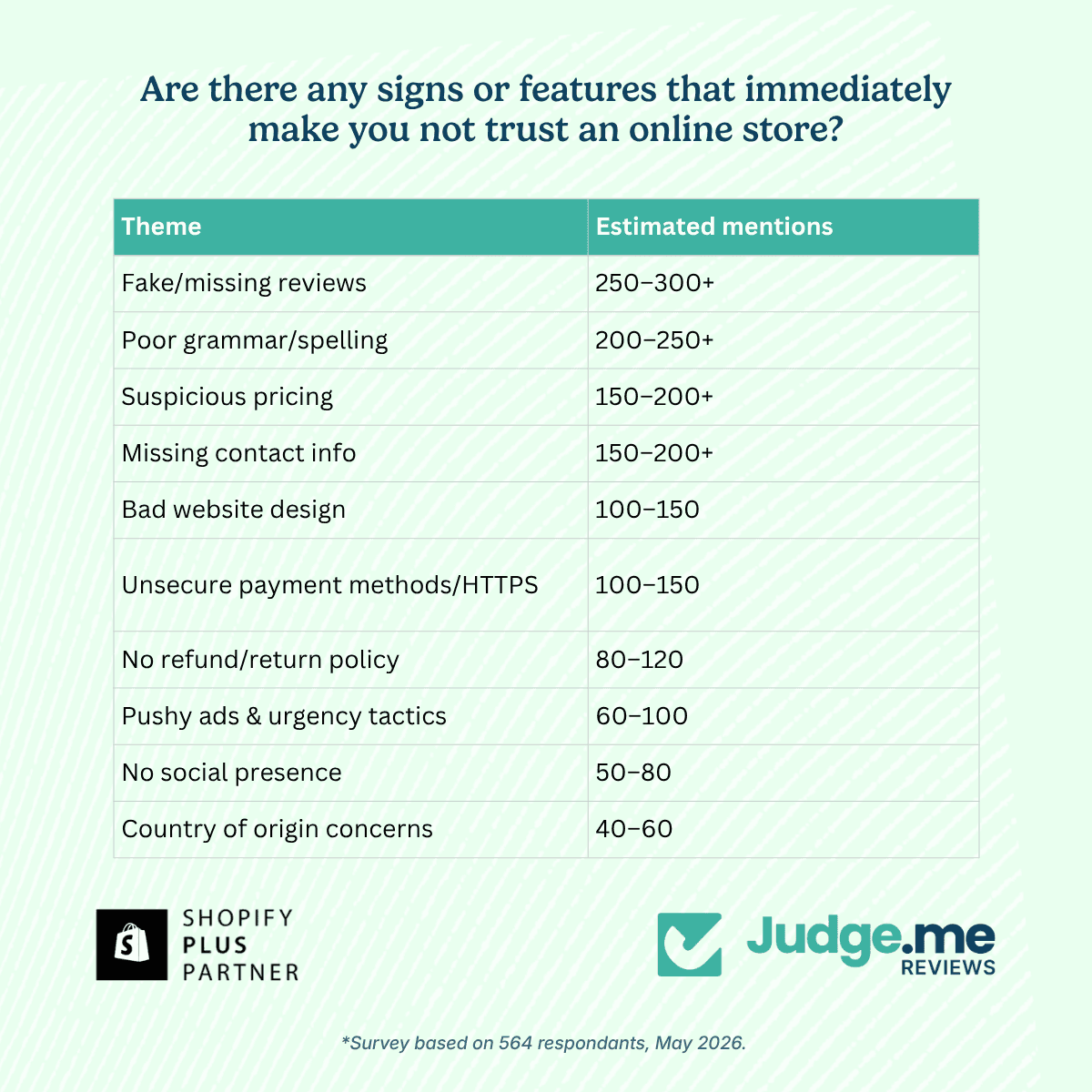
The distrust data reinforces this. When we asked what immediately makes shoppers not trust a store, missing or fake reviews topped the list. Poor grammar and unprofessional design were close behind, with 200–250+ mentions each. These are signals that register before a shopper has engaged with any content.
One finding from the open-text responses is worth flagging separately: shoppers noted that reviews on external platforms carry more weight than reviews on the store itself. An on-site review can be curated. An independent platform is harder to game, and shoppers are aware of the difference.
Once the store passes that check, reviews dominate
Clearing the credibility bar doesn't close the sale. It just earns the next step. Once a shopper decides your store is legitimate, the question shifts from "can I trust this place?" to "can I trust this product?" That's where reviews take over.
But reviews don't work in isolation. When we asked what most increases confidence to complete a purchase, the results were more distributed than you might expect.
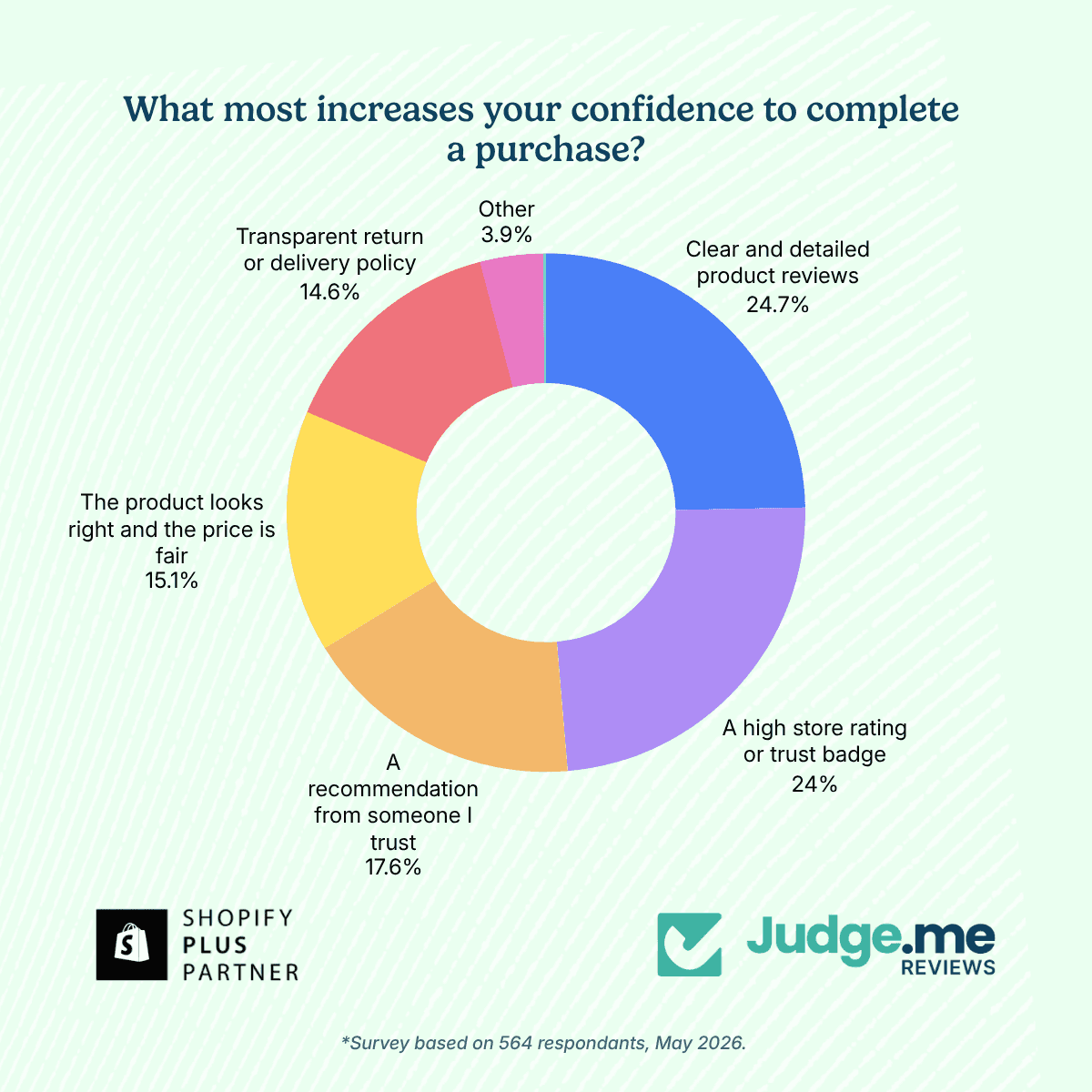
Reviews and store ratings together account for around half of purchase confidence. Pricing, policies, and personal recommendations fill the rest. No single signal closes the decision on its own.
The quality and character of reviews also matter. When we asked what shoppers value most when reading them, the top two answers were a mix of positive and negative reviews (268 mentions) and written detail in the review (264 mentions), both ahead of star rating, recency, and review count.
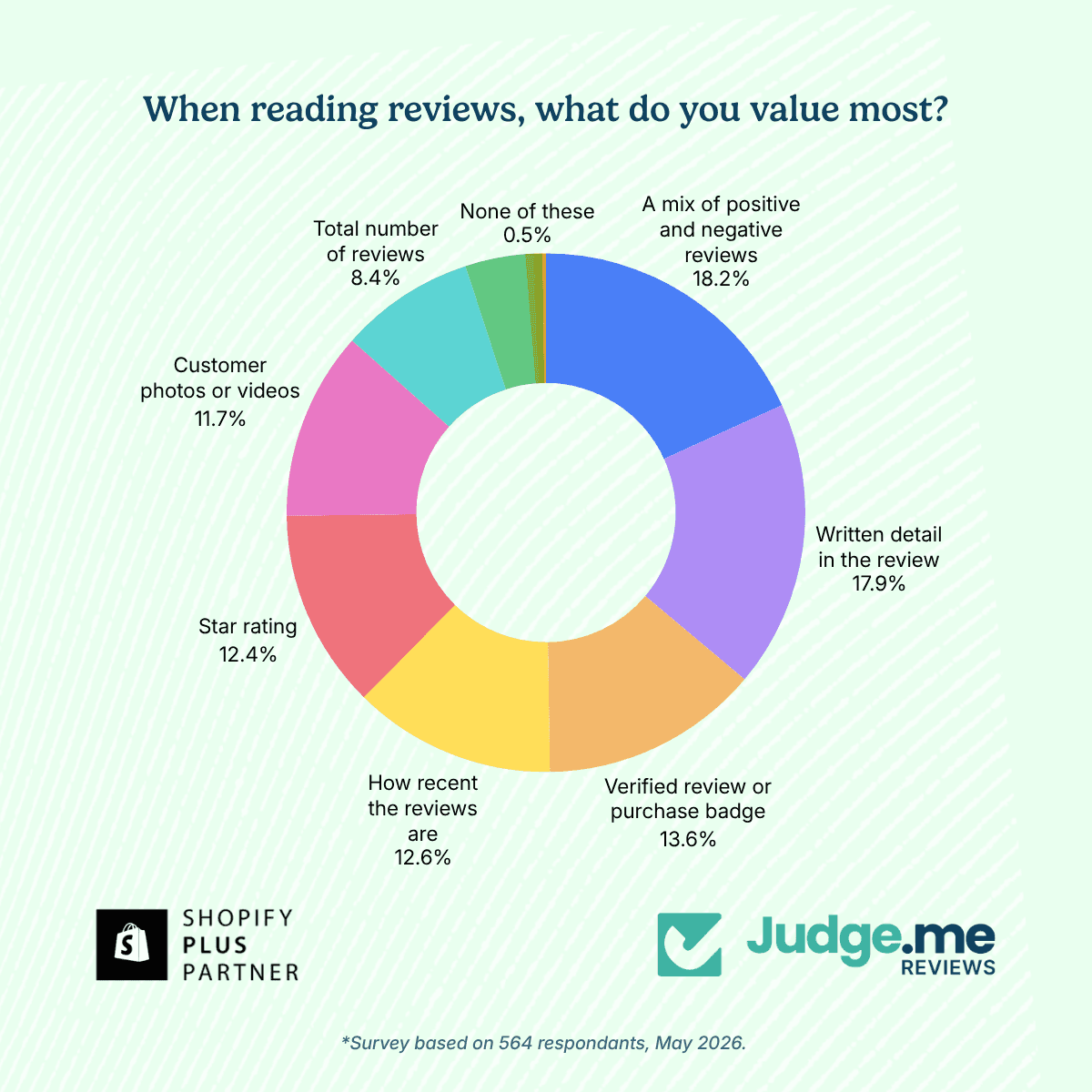
Shoppers aren't looking for uniformly positive reviews. They're looking for reviews that feel real. A store with only five-star ratings raises suspicion rather than confidence, and the data bears this out directly.
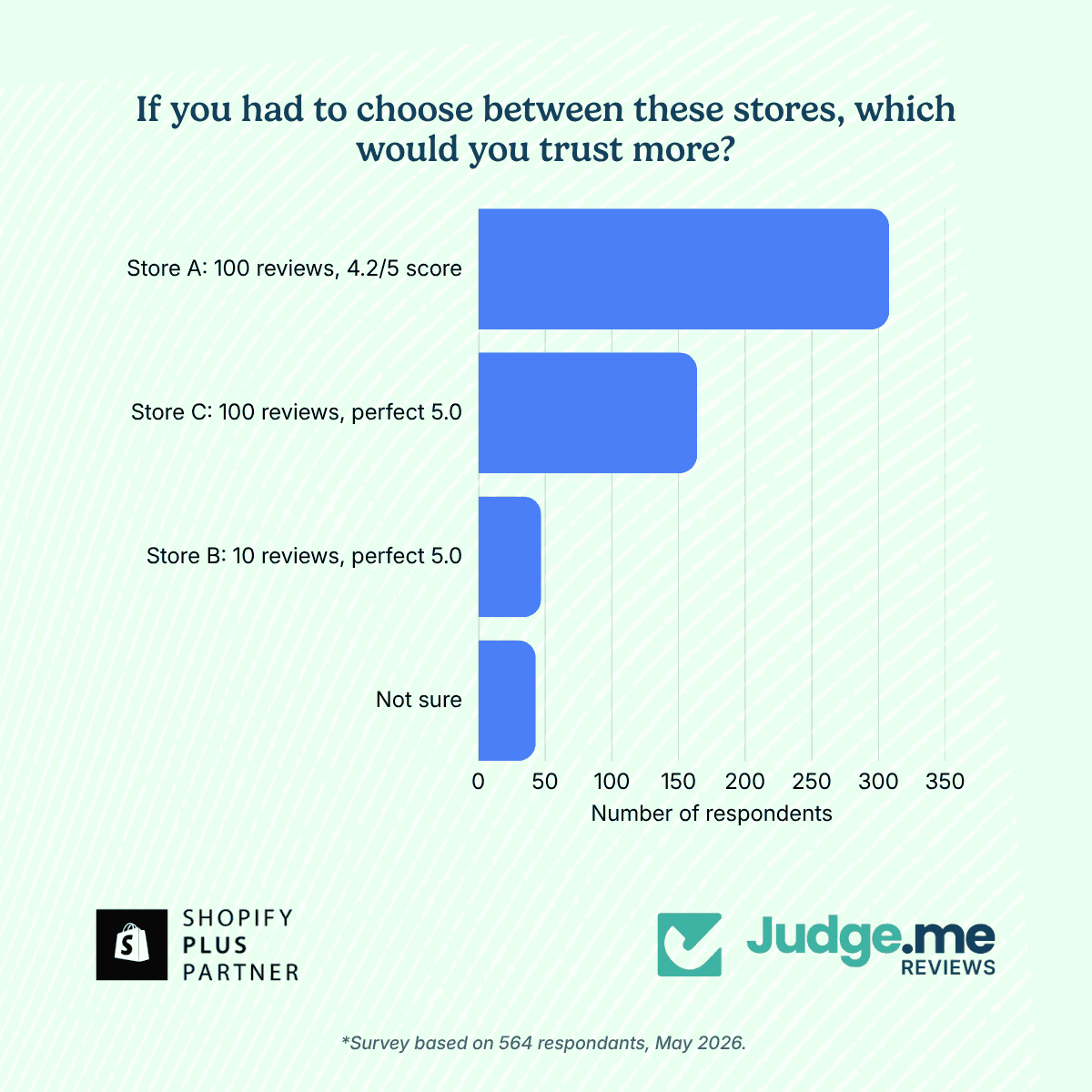
More than half of shoppers chose the store with 100 reviews and a 4.2 score over any version of a perfect 5.0. Volume and credibility outperform a clean rating.
The verified purchase label adds another layer. When asked how much more trustworthy a review feels with a "verified purchase" badge, over 80% of shoppers rated it a 4 or 5 out of 5.
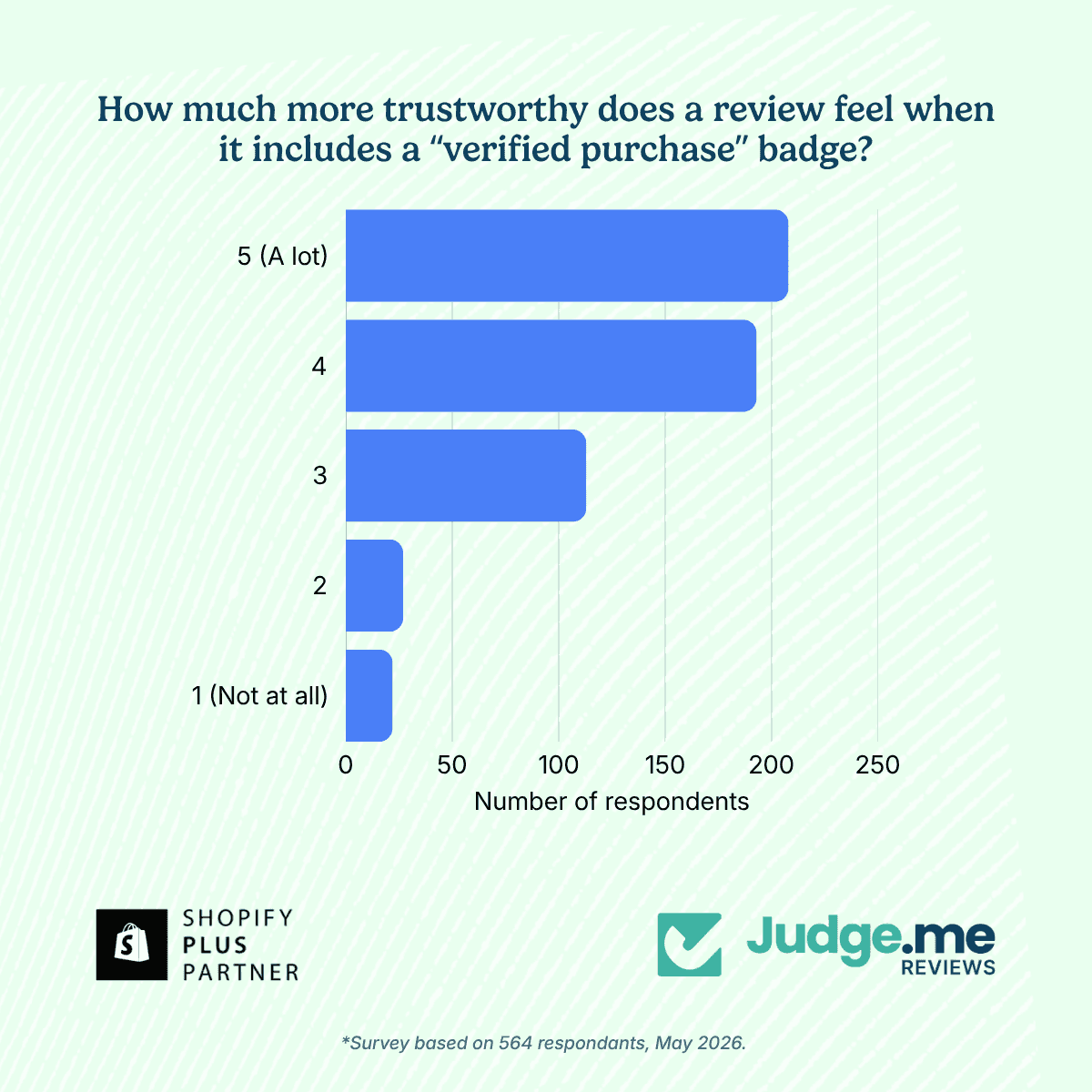
Verification matters because it answers the question shoppers are really asking: did someone actually buy this, use it, and choose to say what they thought? A verified label signals yes.
The same thing that builds trust can break it
There's a useful symmetry in the dataset. Reviews about product quality are the primary driver of purchase confidence. Poor product quality is also the top reason shoppers stop trusting a store.
When we asked shoppers whether they'd ever stopped trusting an online store and what caused it, poor product quality or misleading presentation came first. Products that didn't match their description, arrived damaged, or weren't what they appeared to be.
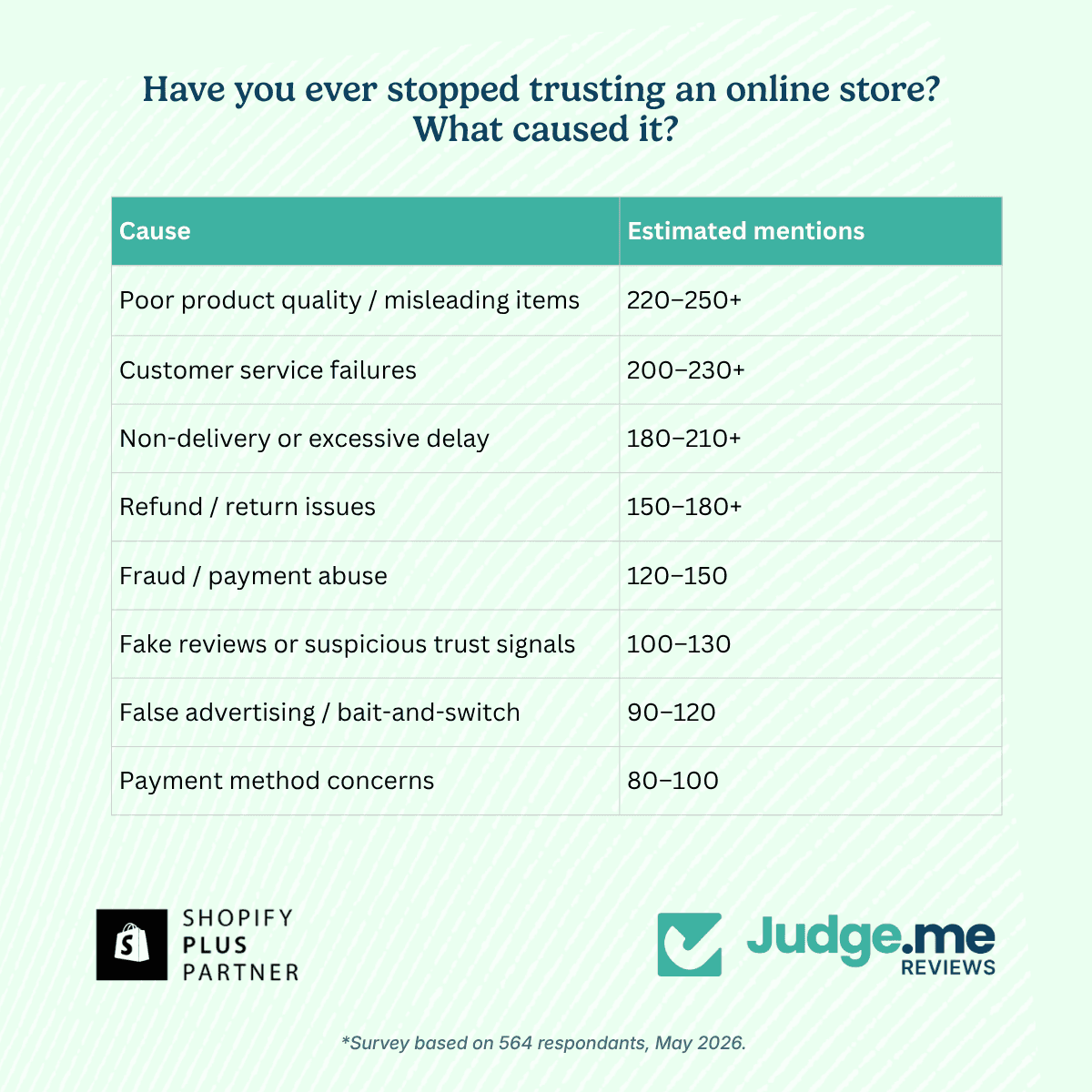
The same dimension that builds confidence in a new shopper is what breaks it for a returning one. The mechanism connecting the two is reviews: honest post-purchase feedback that tells the next shopper what actually happened.
This means reviews aren't just a conversion tool. They're also an early signal for product or fulfilment issues that, left unaddressed, quietly erode trust over time.
One specific finding from the open-text responses is worth noting. A number of shoppers mentioned being offered a refund in exchange for a positive review. It was consistently cited as a trust-killer, not just for the transaction but for the store's credibility as a whole. Shoppers recognise incentivised reviews and treat them as a warning sign.
Three things worth acting on
Get your reviews in front of shoppers earlier. Reviews on product pages are valuable, but they only work if a shopper reaches them. Displaying social proof earlier in the browsing experience, on homepages, collection pages, or anywhere near the first impression, means it has a better chance of doing its job.
Think beyond your review count. Secure payment visibility, accessible contact information, and a clear returns policy are part of the same trust decision shoppers make in the first few seconds. This data puts secure payment ahead of reviews at the first-impression stage. It's worth checking whether your store reflects that priority.
Don't optimise for a perfect rating. Filtering out critical feedback makes your reviews less credible, not more. A store with 100 honest reviews at 4.2 is trusted more than one with 10 perfect reviews. The goal is authenticity, and the data shows shoppers can tell the difference.